
interviews

Myles Smith - The Music Week Interview

As Myles Smith earns the biggest opening for a debut album so far in 2026 with My Mess, My Heart, My Life, here's a chance to read our cover feature with the RCA-signed singer-songwriter and streaming star... With not one, ...
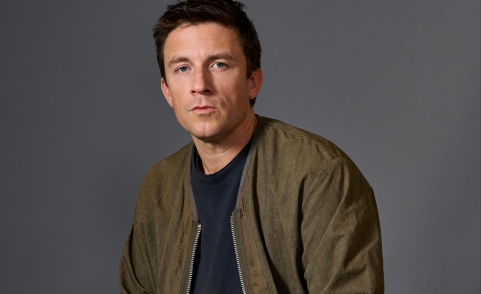

Tom March - The Music Week Interview

About to mark two decades at Universal, former Polydor co-president Tom March made the move Stateside in 2022 as Geffen president and was upped to chairman & CEO of Capitol Music Group in 2024. Now overseeing a roster that stretches from The Beatles and The Rolling Stones, to Doechii, Leon Thomas, Sienna Spiro and more, he is living the dream in LA. But, as he tells Music Week, the UK exec will never forget his roots. Sit back and enjoy, as he sounds off on his route to the top, the secret to breaking artists and why he sees Capitol as “a global label”… WORDS: Andre PainePHOTOS: Damon Casarez “I look out of my window on to the Hollywood sign and the hills around it – I’m not going to lie, it’s a dream view.” Four years after relocating to the US, British executive Tom March is still slightly wonderstruck at where the music industry has taken him. As chairman & CEO of Capitol Music Group, he occupies an office on the 13th floor of the iconic Capitol Tower in LA – a building with both a commanding view and an incredible history. “When I leave the office at night, I sometimes stop in the car park and stare at the building,” he smiles. “It’s nice to just stand there and reflect, because you realise you’re standing on the shoulders of giants. It’s a really powerful building.” That power lies in Capitol Music Group’s historic labels including Capitol Records, Motown, Blue Note and Astralwerks. Music icons who are part of the fabric of these companies include The Beatles, Frank Sinatra, Diana Ross, Stevie Wonder, Marvin Gaye, The Jackson 5, Spice Girls, Halsey, Beastie Boys, Norah Jones, Erykah Badu, Miles Davis, John Coltrane, Aerosmith and Katy Perry. The easygoing March, in a typically expansive mood, shares a story of a recent visit to the Capitol offices by the surviving members of The Beach Boys to mark 60 years of the classic album, Pet Sounds. “Sometimes these things are pinch-yourself moments that you get alongside your day job,” he admits. There was also a trip to Paul McCartney’s studio to join the former Beatle to listen to the nostalgia-soaked new solo album, The Boys Of Dungeon Lane, which is about to be released as our interview takes place. “It was honestly probably the most incredible experience of my life,” he says. His elevation to the top job at Capitol now means he’s the label boss behind both Paul McCartney and The Rolling Stones, as well as breakthrough stars Sienna Spiro, Leon Thomas and Doechii. It follows a two-year spell as president at Geffen overseeing superstars such as Olivia Rodrigo, who has just confirmed 11 nights at The O2 (“I’m very proud of her – she’s the best”). After four years Stateside, though, March remains British in his tastes – sipping a huge mug of tea during our interview.  “I drink a massive amount of tea – I reckon I’m about 65% PG Tips,” he laughs. The March family relocation has been supported by a group of fellow British industry figures, including Warner Chappell Music CEO and co-chair Guy Moot, and Harry Styles collaborator, Kid Harpoon. “There’s a lot of people that I’ve become much closer to since moving here,” says March. “We moved at a similar time to Jonathan and Lucy Dickins as well. We live around the corner from each other and we have kids of a similar age. Guy was great as well, he reached out when I first moved here.” As for UMG CEO & chairman Sir Lucian Grainge, he gave March a robust pep talk, the substance of which is probably not suitable for print. “It was a classic Lucian-ism,” grins March. To negotiate the time difference, he arranges an early video call in his home office in Beverly Hills. It provides a chance to show off all manner of March memorabilia, including Music Week covers and articles celebrating his three Record Company wins at the Music Week Awards as co-president of Polydor (“I was very happy to see they won it again this year”), a framed photo of Florence + The Machine headlining Glastonbury (March worked with Florence Welch from debut single, Kiss With A Fist), and multiple classic shots of The Who and Oasis. He attended four of the Gallaghers’ reunion shows in the UK and US, including the opening night in Cardiff.  “I had a brilliant time, it was so good – although I’ve not drunk that many pints in years,” he shudders. There’s also a prized shot alongside his son with Arsenal midfielder Martin Ødegaard. March has been keeping track of the Gunners’ triumphant progress towards the title, with fellow LA-based fans including Moot and Kid Harpoon. “We’ve suffered through many games in early mornings,” recalls March, who is off to the Champions League Final in Hungary in the days after our interview.  Capitol Music Group has been on its own winning streak in the past 18 months, notably at the Grammys with victorious acts including Doechii, Leon Thomas, The Cure, and Yungblud. Thomas won two Grammys, including Best R&B Album for Mutt, following six nominations. “It was phenomenal, Leon has been an enormous break for us,” says March. Meanwhile, Hot 100 chart star Sienna Spiro is surely going to be another Grammy contender.  “I think when you have very special artists, you just have to put a lens in front of them, have the right strategy and make sure you show their talent to the world, and then the world will agree with you,” suggests the exec. March and Capitol Music Group president Lillia Parsa have overseen a creative and commercial resurgence. CMG has made a multi-genre impact with the likes of Yeat, Kali Uchis, Lil Baby, Offset and NBA YoungBoy, as well as rising stars like Royel Otis, Young Miko and Good Neighbours. In terms of US market share, CMG held at No.6 in Q1 with an increase to 4.92%.  “I’m much more focused on breaking artists and growing artists’ careers,” he says. “If you do that, those things [market share gains] naturally happen.” Doechii’s mixtape Alligator Bites Never Heal won Best Rap Album at the 2025 Grammys (only the third woman ever to do so), while her single Anxiety reached the Top 10 of the US Hot 100, as well as No. 1 in Australia, Switzerland and New Zealand. It peaked at No.3 in the UK and has amassed 577,855 units according to the Official Charts Company. Signed to TDE (Top Dawg Entertainment), Doechii is a prime example of CMG working with other executive entrepreneurs on an artist campaign. March highlights the TDE team’s focus on artist development. “Working with TDE and breaking Doechii has been a real highlight and success of the last couple of years,” he says. “She has exploded across culture and music over that time, and I’m very excited to start rolling out what will be her debut album in the near future. She has been one of the biggest and most important artist breaks of recent years.” As a Glastonbury regular (“my favourite place on Earth”), March witnessed Doechii’s much talked about turn in 2025.  “Her creative is phenomenal,” he says. “We went from 300-capacity shows to 10,000-capacity shows all around the world in the space of six months. When the world got to see how incredible she was, it changed everything.” Doechii is part of the story of the Capitol labels’ resurgence across hip-hop and R&B (“We have a really powerful roster,” says March). He highlights their partnerships with Field Trip Recordings on chart-topping rapper and singer Yeat (“an enormous success”) as well as developing PlaqueBoyMax and Bnyx, along with QC (Quality Control) acts Lil Baby, Quavo, Yachty and JT (“they are a huge part of Capitol”). Despite his big move to the US, March is also overseeing a wealth of UK talent at CMG – from Yungblud and Dave, to Alessi Rose, Sienna Spiro and developing act Feng from South London.  He will also be watching the nation’s football talent at England’s World Cup matches. Capitol acts J Balvin and Katy Perry have been booked to play at opening ceremonies. “Everyone’s excited for it,” says March of the tournament in the US, Canada and Mexico. In his latest big sit-down with Music Week, he shares his experience of two decades in the Universal camp, rebuilding the roster at Capitol and his global mindset for artists… Does it feel like quite a responsibility overseeing some of the most iconic labels in the world? “Yeah, it’s not lost on me, the history of Capitol, and then being a custodian and helping to guide some of the legendary artists that we have on Motown and Capitol Christian Music Group and Capitol Nashville [which both operate under Capitol Music Group Nashville] that we’ve now launched. As a Brit coming here, it’s a dream, especially with the history across these labels.” How did it feel to be promoted to such an elevated role? “I felt I had just started to get some momentum [at Geffen]. I had brought the whole team in and I had brilliant artists. But this was an opportunity you couldn’t say no to. I knew it was a big job, but I knew I would be allowed to build the team exactly as I wanted to. I’ve worked with John [Janick, chairman & CEO, Interscope Capitol Labels Group & IGA] and Berm [Steve Berman, vice chairman, Interscope Capitol Labels Group] for over 10 years. I’m very fortunate to work with them, they’re the smartest guys I know, and they are the biggest help to me. So it wasn’t like I was leaving that behind. It was just that this was where our company needed us.” Was it a big challenge to take on, though? “There was work to do to rebuild the roster and to reshape the team, and then to make sure the Capitol team fitted well within the West Coast Universal operation we now have. [Also] to make sure there’s great synergy between what we’re doing at Capitol and the Interscope team, and then some of the areas across the business that we share. The first year was relentless, but very quickly, I got the team in place and settled. It’s the fourth time I’ve come into a label [after Virgin EMI working with Ted Cockle, then Polydor and Geffen] and been told to shape it, organise it, get it right structurally, bring the right people in. When that starting gun goes, there’s no time to waste. You just have to make sure that you’re moving with speed and intention. For the first six months, I don’t think I ever took a second off. But I’m very happy – I can’t believe where we are now.” You came into the role after a reshuffle of the West Coast operation at Universal. How has that played out? “Honestly, it feels like a distant memory now. Looking at it now, structurally, it works brilliantly. Capitol has the resource, the infrastructure and the size of a major label, but we don’t have the roster the size of the other major labels. So there’s a lot of extra resource that we have, where we can operate a little bit differently, a little bit more nimbly than maybe some can because of our size.” Two years in, have you had a chance to reflect on where you have got to? “I always want more, and you always want to achieve more. You always want more success. But I’m happy with how we’ve grown the roster – the artists we’re breaking and some of the more established artists on the roster, how their careers are moving. Because of where we are as a label, and the job to build a new roster for Capitol Records, I think you can see it in the acts that are breaking and growing that we’re building momentum. You’re getting that because new artists get space within our roster. They get focus and they get attention, which is why you’re seeing that reflected in Grammy nominations, artist breaks and everything else.” How different is it leading a US record company for that market compared to a UK operation? “I don’t see Capitol as a US record label. We are a global music company. Our campaigns are global campaigns, which we drive out of the US with our great partners and our great teams around the world within UMG. We think globally right from the minute we get an artist; it’s, ‘Here’s our 18-month plan, here’s our strategy. Here’s where we think the releases are going to come, the touring, the live shows, the moments that we’re going to create.’ We build out a global plan of, ‘Here’s how we’re going to move you around the world.’ We never think ‘US’. You move campaigns as one globally now; you don’t move them in one market and then go to another. So I think maybe that’s the nature of how the business has changed. But that’s how you move records now.” A label can be quite nimble with breaking an artist in the UK, though, can’t they? “The market moves quickly in the UK; it’s such a great market for that. If you have the right culture and momentum, and you can drive the conversation and create the right moments, you can make a dent really quickly in the UK. Australia is the same. There are certain markets where you can really hit culture. And there’s such an amazing ecosystem in the UK that’s really powerful for building and breaking artists – we have such incredible media, brilliant radio, great content opportunities. The UK is a nation of music super fans, it has such incredible music and culture coming from it. I will get artists into the UK as fast as I possibly can, and the content you create from the UK, you can move it around the world so, so quickly and so easily. It’s such a great hive of content creation. So you send an artist to the UK, and what you make in the UK, I can make sure that millions of people around the world see that. I just need to make sure the artist is moving in the right way, and their strategy is cohesive.” Does it take longer to break in the US? “Every artist will move at their own pace; you can’t force anything and artist development takes time. I’ve got some artists where things have moved really quickly like Sienna Spiro. But I signed Sam Fender with Richard [O’Donovan, head of A&R], Ben [Mortimer, Polydor Label Group president] and everyone at Polydor eight years ago, and we just had his first record in the Hot 100 [Olivia Dean collaboration, Rein Me In]. Dave – whom I’m lucky enough to have come through Capitol in the US, working with Benny [Scarrs] and Jack [Foster, Neighbourhood] – has also just had his first record in the Hot 100 [Raindance with Tems], which went Top 50. So you’ve got some artists where their journey in the US to get to the Hot 100 takes a bit longer. They’re two of the best artists in the world. You then have others where things move a little bit quicker, but it’s about coming up with the right strategy. I’ve been working with Yungblud from his very first release, back when he played his first gig in a pub to 70 people. He has now won his first Grammy and it’s arenas next for him. So, for the US, these things take as long as they take.” How do you manage campaigns now when an artist like Sienna Spiro can secure simultaneous hit singles? “When you are coming back with a particular artist, you’re going to call it a single. But particularly when you’re building an artist, it’s more about putting out great music. You’re not aiming for a huge single with every song. Some of it will just develop who the artist is and connect them to their fans in a different way. But if you keep putting out great music, the audience will tell you when there’s a moment to really double down. I’m always focused on multiple songs at any one time.”  You worked alongside John Janick at Polydor on US artists including Olivia Rodrigo. How does he support you in this role? “He thinks big-picture. In terms of how creative he is, his marketing brain, his A&R brain, he is the most impressive person. So to have him as a boss, as someone that I get to speak to whenever I need to, to have him in the trenches with us, building artists, brands and thinking strategically across the company… I couldn’t wish for anything better.” How do you combine with Lillia Parsa on the operation and creative vision for CMG? “It was a great extra motivator for me to know that I’d be able to work with someone with the skills and the respect for what she does that Lillia has. We would not be in the great place we are in as a label now, if it wasn’t for her. She is relentless, she wants to win, she’s hungry. But the biggest thing is how respected she is by the creative community. With some of the biggest and best songwriters and producers in the world, she has been a big part of their careers, backing them from the very beginning. I trust her implicitly. I trust her ears. We have an incredible working relationship. I don’t think there’s anyone with the kind of access that she has. We are very fortunate, as we’re rebuilding the roster, particularly on the pop and rock side, to have some of our emerging artists be able to get in the room with the best people in the world. That can only happen if the best writers and producers take a leap of faith with somebody. They trust Lillia, there’s a great relationship there with so many of the best writers. So our artists are in very safe hands.” What is the A&R approach across the company? “We’re very considered. We’re very strategic. We are very focused on artist development. We don’t sign a lot but what we do sign, we really focus on. I think you can see that in Josiah Queen, who we signed in partnership with Capitol Christian Music Group. He’s the second most streamed faith-based artist [non-catalogue] in the world over the last 12 months. He’s breaking in a massive way, he’ll be in arenas very soon. Royel Otis, Sienna Spiro, Young Miko – these artists are breaking through because they have the time and the focus. Dave’s having his biggest moment in America.” How have you achieved that breakthrough for Dave, and how much potential is there for UK rap artists? “EsDeeKid is on fire as well – Sincere [Lizzy Records boss] has done a great job with him. Central Cee’s had success, too; Dave is selling a huge amount of tickets. Dave’s important in culture here; the new album really connected – and it’s growing and growing. Raindance will be a huge record into the summer here. But I think that’s just testament to Dave as one of the most important British artists of recent history, and the great work that Ben [Scarrs] and Jack [Foster] have done for the last decade. It’s just incredible, patient artist development by great managers and a great artist. If you have a brilliant artist and you stay true to yourself, your moment will come if you reach for things. I’m very fortunate to still work with so many British and Irish artists. Across the roster we have Lewis Capaldi, Sam Smith, Niall Horan, The Rolling Stones now, which is fantastic, Paul McCartney, The Cure, Sienna Spiro, Disclosure, Yungblud, Alessi Rose. There are so many brilliant British and Irish artists from every different genre.” It’s quite something to be heading up the company behind Paul McCartney and the Stones… “I’m very fortunate to be a custodian of such an incredible label. We’ve been calling the [new] McCartney album almost like a prequel to The Beatles. Steve Berman and I were lucky enough to go down to his studio in December and have him play it to us, and talk us through the stories about John [Lennon], his parents, hitchhiking with George [Harrison]. He told us some hilarious stories, some that will see the light of day and some that we will hold dear forever. It’s a magical record. And the Stones, these are timeless records. I couldn’t be more proud and excited to work with them.” What other genres are you building up? “We’ve grown the Latin side of the label in partnership with Nir [Seroussi], who heads up Interscope Capitol Miami. Kali Uchis has joined, and we’re developing Young Miko with Wave Music Group. We brought J Balvin in as well. So we’ve been growing out the Latin side. We’ve been developing the K-Pop side as well with Aespa, Meovv and there’s a new signing with YG [Entertainment] that I can’t talk about yet.” In the dance space, you teamed up with former RCA and Ministry Of Sound president David Dollimore on the Disorder JV. How is that progressing? “It feels phenomenal what we’re building with Disorder, just in the space of two years. We haven’t really shouted about this much yet, but over the last few months we’ve now signed Interplanetary Criminal, Disclosure, Rudimental. We recently signed a rapper called Lex Armani, who’s really starting to move. How we’re developing that roster feels incredible. We see Disorder as a global record company. David happens to be based in London, but he’s really plugged into us in the US. The music we’re signing is global.” With Katy Perry, Capitol has one of the biggest pop artists going. What’s behind her current streaming revival? “Her catalogue is up 70% since January. She’s the 16th largest artist on Spotify today, and this week is going to be the largest global streaming week of her career. So we are growing and growing. I put that down to brilliant cohesiveness between Katy and the team. My marketing team is exceptional. My viral marketing agency, which we have inside Capitol, is the best. Our strategy and our digital marketing is phenomenal. So really, it’s just her incredible catalogue, Katy being one of the best artists in pop history, and a whole new audience discovering these incredible songs. As we start to roll out new music, she’s in a brilliant place now. It is an entirely new global audience discovering these incredible songs.” How much are you thinking about opportunities with AI? “If you look at the new Stones video [In The Stars], that’s a great use of AI. We saw what The Beatles did with Now And Then and how AI was used [to complete the track]. The DSPs are opening up new revenue streams for artists [with Spotify’s AI remix and cover version tools], if they and the writers decide it’s something they want to engage with. I think it really has to be led by the artists and what they are comfortable with, and how they want to use it. It’s going to just continue to evolve. As long as artists are protected, it’s up to them to make the right decisions. Our job is to make sure that we are great custodians of their art and that we put all the right guardrails in place. Then, they can make the decision on how they want to use it.” Finally, how will you be marking your 20th year at Universal?  “Another hit would be nice! I’ll take a hit for my 20 years.”

Sienna Spiro - The Music Week Interview

Sienna Spiro is about to hit the big time. On the eve of her debut album Visitor, the Londoner is on a fast track to becoming the UK’s latest breakout superstar, powered by her inimitable voice, Spotify Global Chart Top 10 viral smash Die On This Hill and a growing legion of followers. Behind the numbers lurks a remarkable story, as Spiro tells Music Week. Joined by co-manager Miriam Maslin, Capitol Music Group CEO and chairman Tom March and the company’s president Lillia Parsa, she holds court for a discussion that takes in being inspired by jazz and Frank Sinatra, her painstaking quest for success, why “AI music is s**t” and more besides. The tale begins, however, with biscuits… WORDS: Ben HomewoodPHOTO: Amy Catarinozzi         “I can’t touch another Custard Cream!” blurts Sienna Spiro. “You know, you say something you like, and everyone just decides that’s what you’re about. And I’m more than just a Custard Cream.” The singer, talking to Music Week on her tourbus en route to Glasgow, is setting the record straight. In September last year, she uploaded a TikTok (that now has six million views) in which she wore a skirt with a built-in purse, opening it to reveal three Custard Creams stashed side by side. A couple of months later, during an interview on Capital FM’s Breakfast Show, she was gifted a large Custard Cream-shaped tin, packed full of the biscuits. “Thank you so much!” Spiro said, amazed. “I love Custard Creams! I’m passionate about two things: music and English biscuits – I could talk about them all day.” She would go on to praise Jammie Dodgers and dismiss Bourbons but, seemingly, her desire to discuss biscuits has dimmed. And when we venture to ask which revelation of a preferred Spiro delectation might be next, her answer is firm. “Nothing!” she says. “I’m never saying I like anything again!” For what it’s worth, we add, we’re in total agreement with the opinions she expressed in the Capital interview. “Good,” she smiles. “You know what you’re talking about.” Her choice of phrase is appropriate, because, increasingly, it feels like everyone knows what Spiro is talking about. The 20-year-old, whose debut album Visitor is due via Capitol Records on July 3, has a huge fanbase (even if she concedes that, “I’m not very good at tech, my mum tells me when it goes up and down”). She has 117 million likes and 3.8m followers on TikTok and 1.2m on Instagram. Even her blankets are viral: she points lovingly to her throw, made by influencer-favourite Lola Blankets.  On Spotify, she has over 28m monthly listeners, while her biggest song is Die On This Hill, with more than 450m plays. That track, released last year, hit No.9, her highest UK chart position to date, and has 620,249 sales according to the Official Charts Company. In January, it hit the Top 10 of Spotify’s Global Chart. “This is in-credible, what’s happening in my life and in my career,” Spiro says, matter of factly. “I’m 20. This is not normal for a 20-year-old.” “We knew that Die On This Hill was a record that was going to take over the world,” says Tom March, CEO and chairman of Capitol Music Group. “And it did…” Yet Die On This Hill is far from the only of Spiro’s songs – all instantly identifiable thanks to her husky, acrobatic tone, the result of nodes on her vocal cords – to have racked up formidable numbers. Maybe, released in 2024, has 458,403 UK sales, You Stole The Show has 292,045 and The Visitor has 146,985. New single Material Lover features in The Devil Wears Prada 2 and debuted at No.23. Also, in March, Die On This Hill, The Visitor and You Stole The Show were in the Hot 100 in the US at the same time. “And she’s about to have a fourth song in that chart with Material Lover,” says March. “We think it could be a first for a British artist before they’ve had an album out. We’re trying to get verification on that, but regardless of whether it’s a record or not, Sienna is breaking around the world. She’s been No.1 in Malaysia, Thailand, Singapore and she’s just been to South East Asia, and the scenes were unbelievable. She’s a superstar there already.” Former co-president of Polydor in the UK, March moved to LA to become president of Geffen Records in 2022, before promotion to his current role in February 2024. As part of the same Universal Music Group reshuffle, Lillia Parsa, former SVP of A&R at Universal Music Publishing Group, was appointed president of Capitol Music Group. Today, the pair are practically giddy as they join us to discuss the rise of Spiro, who was their first signing.  “It was our first week at the office and we both had just heard Sienna,” says Parsa. “We had actually both met her separately, Tom when he was at Geffen, and me when I was at UMPG. I’d been setting her up in sessions with my roster super early on, trying to find her crew. Then, Tom and I were getting to know each other, and he called me, and said, ‘Do you know this girl, Sienna?’ And I was like, ‘That’s so funny, yes!’ It was instant for both of us. We signed her in our first week.”  March recalls seeing Spiro for coffee on her very first writing trip to LA, at a meeting arranged by Jack Street, co-founder of Method Music, Spiro’s management company (also home to Capitol acts Sam Smith and Disclosure). “I had absolute faith that if Jack was this excited about somebody, I should probably meet them, and then I just heard her voice,” March recalls. “I always think, if you’ve got an incredible voice and you write great songs, a good team can help do the rest. You could tell Sienna had the magic there.” March and Parsa put paid to any notion of a “label scrum”. “We identified her really early, she had no music out,” March says. “We were looking for new artists that we were excited about, that we would take the time to develop. If you’re going to do that, they have to write great songs and have a great voice, but they have to have a great team around them, and we knew she did.”  March takes care to credit Street and Miriam Maslin, who also manages Spiro, for “taking a leap of faith” with Capitol. “We’d just come into our roles and there were a lot of people that didn’t give us the time of day because of the job that it was perceived we had to do and how long people thought it might take to do it,” he says. “But Lillia’s resume spoke for itself and I’ve known Jack a long time and he knows I can develop artists.”  “Miriam has since told me that she wanted to go with the people who are focused on the mission, which is to break Sienna,” Parsa says. “We were just so bullish on Sienna, no matter what else was going on.” March returns to the idea of the team around an artist being the key factor behind any success. “The best deals that you do come down to that,” he reasons. “Anyone can throw money down, but it’s more about asking, ‘What is the right team for an artist and who’s going to put the time in to develop them?’ At Capitol, our whole team is focused on artist development, so I think they saw that early, which was smart on their part and it paid off.”  Maslin is delighted with the partnership so far. “There’s a real respect at Capitol for long-term artist development and for allowing things to unfold organically, rather than forcing commercial decisions that may work in the moment but not age well long term,” she notes. Even if it’s because of how early Capitol firmed up their interest in Spiro, a new UK act being signed out of America is notable. “The US made sense for us as it changes the scale,” says Maslin. “The reach is obviously huge, but more importantly it opens doors creatively and culturally. You’re suddenly operating in a much broader landscape in terms of collaborations, media, touring and discovery. But equally, we’ve been very conscious about keeping the campaign intimate.” Spiro, too, is happy with the partnership. “I mean, all my favourites were signed to Capitol – The Beatles, Frank Sinatra... I love all that,” she says, before laughingly adding, “And I really wanted [their logo] on my vinyl, you know?”  The singer says her team at the major is “amazing”.  “I love that one of the heads is a woman in Lillia, that was a really big reason for me,” she says. “I was very upfront about who I am and what I want to do, and they’ve allowed me to do what I want, and keep my vision. I’m very grateful for that.” Parsa says that Spiro and Maslin “run a tight ship” and hints that the singer means business in meetings, too. “Whatever you say to her, you have to really believe in it, you cannot waver, and you have to be willing to go at it with her,” she says. “If I’m not being honest with her, she’ll be like, ‘I can’t speak to you, you’re not being honest.’” Parsa sums this idea up with a memorable phrase. “Sienna doesn’t want fluff,” she says. “I mean, she wrote a song called Die On This Hill about believing in something. She doesn’t need to hear, ‘Oh, you’re so great…’ She’s just like, ‘I want to be the best, I want to work as hard as I can.’ Because there’s no plan B for her.” Sienna Spiro started writing songs aged 10 and one of her first, Lady In The Mirror, channelled her emotions after being bullied. She performed it in assembly in front of the whole school, including the person who had inspired it. The strength of her resolve shines through in many stories about her past, including the one about the weekend she spent at Reading Festival, frantically emailing East London Arts And Music (ELAM), where she was applying for a place. “I’ve known this is what I wanted to do my whole life, and that I would do anything to make it work,” she says. “After my GCSEs, I found ELAM, didn’t get in, then emailed them as many times as it took for me to be allowed in. Also, I had no other choice. I left my other school and I didn’t apply anywhere else, so I had to get in!” When she did, things began to snowball soon enough. Maslin got in touch after seeing Spiro’s TikTok video of her covering Finneas’ Break My Heart Again in 2022. “I did a bunch of meetings the week she reached out, and I was chatting so much shit because I had no idea what I was talking about,” Spiro recalls. “I’d just never met anyone like her. I knew I wanted to work with women, and she was so inspiring and hardworking, and our visions were so aligned.” Spiro is frank in her assessment of the make-up of the music industry landscape. “Women are absolutely not treated equally behind the scenes, in management, labels, studios, everywhere…” she says. “The term ‘boys club’ is very, very, true. It’s really alarming to see, and the further I’ve gone in my journey, the more I’ve noticed it. I really hope [things will improve], and they have changed for women who are front-facing and in the public eye. But I think the way women get treated behind the scenes is just awful.” Parsa emphasises the importance of the “almost 90% female” team they have built around Spiro, including senior director of A&R Aria McKnight, director of digital marketing Miya Ugursoy, SVP of publicity Lisa DiAngelo and more.  “Sometimes I look around when we’re in a room and think, ‘It’s all women in here,’” Parsa says. “It’s also a young team, and we capitalise on that. It’s definitely unique and leads to direct conversations.”  Maslin says her bond with Spiro is “much deeper than a traditional working relationship”.  “I’ve managed Sienna since she was 16, so there’s an enormous amount of trust there,” Maslin says. “I think the role of a manager is ultimately to help create the conditions for an artist to thrive. That can mean pushing them, protecting them, or helping them navigate pressure or difficult decisions. It’s also about seeing the bigger picture, not just reacting to moments, but helping shape a career and identity.” Maslin also highlights the importance of “being the most honest person in the room”. “I know Sienna would say the same,” she adds. “My role is never to be a yes person or to allow the environment around an artist to become an echo chamber that feeds ego instead of potential. The job is to give honest feedback, even when it’s uncomfortable, because ultimately that is what helps an artist grow. There has to be somebody they can turn to who will tell them the truth without an agenda.” Right on cue, Spiro offers her thoughts.  “I think a lot of people sometimes get distracted by new, shiny things, and Miriam doesn’t,” she says. “She’s completely my teammate and my equal. Maybe you just see my face in this, but it’s us two completely. Having someone there who protects and supports you, who is aligned with your vision and cares about you, the things around you and your artistry, is so important.”  The latest example of the latter is the most emphatic yet. At a concise 10 songs, Spiro’s debut album Visitor excels most in the immediacy of its impact. As arrangements and choruses swell, Spiro’s vocal shines, while her lyrics often land with a satisfying thwack, like arrows from a bow. A line from Great Expectation serves to sum up the Sienna Spiro experience entirely, as she utters the words, ‘I sing just to know that I’m alive’. “I have struggled for a lot of my life to feel things, not in a victimised way, but it’s just, you know, the truth,” Spiro states. “I’ve grown up with a lot of depression. It’s a thing in my family, a chemical thing, and that comes with numbness. The way I’ve dealt with that is music, because it’s the thing that makes me feel the most. That was the last song I wrote for the album and that line is very self-explanatory and truthful.” Made in New York’s Electric Lady Studios, Abbey Road in London and Valentine Recording Studios in LA, Visitor was recorded with executive producer Omer Fedi, Blake Slatkin (SZA, Charli XCX), Emile Haynie (Lana Del Rey, Florence + The Machine), Yakob (Banks, Kali Uchis) and Michael Pollack (Rosalía, Lady Gaga). Composers Larry Gold (Al Green, Silk Sonic) and Peter Rotter contribute orchestral arrangements to a record that started life as an EP, only for the concept to grow to the extent that it needed more songs to do it justice. “It’s about the temporary nature of life, and what comes with being a visitor, which is the way I’ve viewed myself my whole life,” says Spiro, who ruminated on the idea while taking in a show at Smalls Jazz Club in New York in 2024, when the band introduced a piece about impermanence. “I’m just so aware of the feeling,” she posits. “I even find flowers sad because I just hate it when they die. I don’t really get involved in friendships or relationships that I feel are going to end, because it’s happened so much during my life.” Reflecting on the finished record, Spiro says, is “a weird feeling”, and when she explains why, her words offer a peek at the precision behind her craft. “I very much knew exactly what I wanted to make, and I guess it’s hard when you know that and you then need to figure out how you are going to get there,” she explains.  Visitor, an album that sounds so assured you’re inclined to check it wasn’t released decades ago, shows the value of Spiro’s perfectionist streak.  “The album is incredible, you can see the musicianship in her, and that it’s very focused,” smiles Lillia Parsa. “The key to her process is letting her find it and get there on her own.” “I think the emotional intelligence sets it apart,” Maslin opines. “Sienna has an ability to articulate very complicated feelings in a way that feels timeless rather than trend-led. There’s a maturity to her writing that people don’t necessarily expect from someone her age.” Maslin also makes it known that recording a Bond theme is “a combined dream” for her and Spiro. On this evidence, it’s by no means a far-fetched ambition. Parsa highlights Spiro’s “deep knowledge of music” and goes as far as to say she hasn’t witnessed an artist’s writing develop as Spiro’s has. Instead of pursuing promo opportunities early on, Parsa focused on studio time, honing Spiro’s sound. “Now, she’s bringing in great musicians and telling them how she wants the song to sound,” the president says. “She’s really in the weeds on it all, which is really interesting. It takes us maybe a little longer to make a song, but it’s because she’ll work on the same one for a really long time!” One such example is The Visitor, which took nine tries. “That song is so important,” says Spiro. “I’ve just felt like a visitor in so many different ways that I just wanted to do justice to every one. Every time I’d write it, I was like, ‘Oh, I missed out this bit…’ I really wanted to have everything covered, and I think I did that.” In January, in her first Music Week interview, Spiro, who is diagnosed with ADHD, said “being neurodivergent is like having a superpower” and we return to the subject today. “Where being neurodivergent comes in with the way I write is my perspective,” she says. “I’m very self-aware, like, too much. Sometimes I can’t enjoy things because I have to analyse them and hold myself to things, which means I have this overwhelming feeling of guilt a lot of the time.”  Deciding to hang her debut album on the idea of feeling like a visitor brought about some difficult times.  “It took a lot of self-awareness, and asking why I felt like that and when I had felt like that – like knowing I wasn’t permanent to people around me as a kid,” she says. “Time, You & Me is a song about using time wisely. Another example is He’s Not My Baby, I’m His. That’s about this situation with an older man that I was in, and I went way deeper into it as to why it happened, and [realised] it was probably because of having a child complex – of wanting to feel young, taken care of or understood, because I didn’t as a kid. You know?” Perhaps the most important line on the album arrives in The Visitor, when Spiro sings, ‘I want to be remembered’. “I’m so scared of being forgotten and being left behind,” she says, offering a concise explanation for a hard-hitting message. “I just want to last, and I want the things I do to last. It’s a thing that looms over my head all the time.” Right now, in the era of streaming, social media and tech, building artists that will stand the test of time may be the biggest challenge facing record labels.  Sienna Spiro herself suggests as much when we put it to her that her aim of “making things exist for longer and mean something, rather than pumping out loads of small things that don’t last” might seem at odds with the industry climate.  “Yeah… literally!” she laughs. “It’s just this generation, to be honest – my generation. Everything’s so quick. But I don’t think that way; if you do, then you are fuelling the fire. It’s unhealthy for any musician to think that way.”  Spiro – who says she “will always do my own personal social media just ’cause I’m a control freak” – spells out a simple solution. “Make what you want, what you think will last, what you love, what you feel like you’ll never grow out of,” she offers. “I think when you do that, people gravitate towards authenticity – they just do. We’re humans. It’s nature.” Given this stance, it’s no shock to hear her views on AI, which she makes clear has no place in her music. “I love real instruments, real music, doing things that feel human,” she says. “In the music that I love, you can hear the mistakes, the human fuck-ups that AI would never be able to replicate, and that is what real music and musicianship is. I think AI music is shit. Like, it’s just never going to be good. I’m not really sure why someone would use it, rather than just using their brain. Why would anyone want to listen to an AI song?” All of which makes the way Spiro – a 20-year-old obsessed with jazz clubs and vintage style who adorns her Instagram posts with tracks by the likes of Aretha Franklin and Ella Fitzgerald – is cutting through all the more fascinating. “What Sienna connects to in older music culture is intimacy and timelessness,” says Miriam Maslin. “She translates it into a modern context rather than trying to recreate the past literally. There’s something really refreshing about younger audiences discovering references outside of hyper-digital culture. Her world feels nostalgic but modern, and jazz plays a huge part in that. The live shows, especially, play a huge role in making those influences feel immersive and accessible rather than intimidating.” As for who Spiro’s fans are, Maslin says the net is cast wide. “What’s really beautiful is how varied her audience already is,” she says. “We have younger fans discovering her on TikTok, but we also have older listeners connecting. When we did the show at the Royal Albert Hall [for David Attenborough’s 100 Years On Planet Earth], she gained a lot of new fans.” When considering the question of how Spiro’s audience is blooming in such a way, Tom March leans back in his chair.  “Wow, it’s a big question,” he breathes. “If you have an incredible artist with an incredible voice and great songs, then that happens. Right from the beginning, it’s just been about putting Sienna’s voice in front of people.”  March says knowing that her appeal was so instant for the team meant they knew it would be for the wider world, too. “It can start with your strategy across social media,” he says. “And with every performance, whether it was a cover or an original, we just saw the numbers growing and growing, and people were talking about her. It really is about Sienna and her talent; then it’s our job to come with the right strategy and global release plan, and shine a light on her voice through live performance, promo, content, interviews… We led with her voice, and then started to weave in her personality.”  Parsa points to a performance on The Tonight Show Starring Jimmy Fallon (“a full body shiver”) in the US and a slot on The Jonathan Ross Show (“she crushed it!”), while March confides that his mother texted her approval after the Royal Albert Hall gig. “My mum has now discovered Sienna Spiro!” he chuckles. “Now it’s about how we keep finding these incredible opportunities and moments.” March also pays tribute to the UMG operation. “It really does show the power of what happens when the whole global company comes together when we have a great artist like this,” he adds.  Spiro’s debut album looms as the next staging post, with her team united on the message that it will be one of many more milestones to come. “I think success looks very different now,” says Maslin. “Of course everyone wants commercial success, but longevity is ultimately the goal. The industry moves so quickly these days that I think building an artist with a lasting connection to people matters far more than a first-week statistic. I want the album to perform well, but I want Sienna to become one of those artists who leaves a lasting imprint on people and evolves for decades.” “She is the voice of a generation,” says Parsa, simply. “So we’re very excited.” “We are not aiming to peak in week one,” adds March. “We are aiming to have a great showing in the charts and then build. It will be borne out by how we’ve developed through the campaign, but this is about where we are in Q1 next year, much more than when the album comes out. Sometimes I know the album coming out is going to be the peak; this is not going to be the peak for Sienna.” Growth, it emerges, is the axis around which the campaign revolves. “‘Breaking’ is a subjective word,” March says. “I’m not looking at, ‘Can we try every trick in the book to put an album at No.1?’ It’s all about sustaining. And if we do that well, by the end of Q1 next year, I think we’ll be in a place where, hopefully, millions more people around the world know who she is.” With that in mind, amidst the wave of UK acts including Olivia Dean, Sam Fender, PinkPantheress, Lola Young, EsDeeKid and more enjoying global success, Spiro is an exciting prospect. “The UK keeps producing unbelievable artists,” grins March. “It has never felt hotter, and what Sienna’s achieved in such a short space of time is pretty exceptional. I can’t think of too many artists that have exploded on the global stage from the UK and with so many songs [in a similar timeframe]. So it is very unique, but she is very unique.” Spiro highlights a “rise of amazing musicians who use real instrumentation and are very honest, a lot of whom are British”.  “It is refreshing to hear,” she says. “And British music is so important. Some of the greatest artists in the world have been British: The Beatles, Adele, Amy Winehouse… There’s an honesty and integrity to British music that is important. I really love when the world discovers a new British artist, and I feel very honoured to be British and be part of people recognising British music.” On the subject of Britishness, we circle back to where we began. It turns out that Parsa and March have enjoyed tea and biscuits with Spiro on multiple occasions, although not enough for Parsa to be familiar with one of the giants of the market. “A Digestive? I don’t know what that is!” she admits, prompting a closing promise from March, amidst much laughter. “You know what?” he says. “I’ve got some at home, I’m going to bring you some Digestives, Lillia. Milk chocolate, dark chocolate… All day long. I do love a Digestive!” It’s tempting to wonder what Spiro might make of this exchange but, as she told us at the outset, she is about much more than just biscuits…

Staying Power: Celebrating two decades of Raw Power Management

subscribers only

Remi, Steady, Go - Remi Burgz talks BBC Radio 1Xtra, the state of UK Black Music and more

subscribers only

Feeling supersonic: Bristol's Aviva Arena to open up 'huge market' for touring artists

subscribers only

MORE Music Week Features

Show More
Loading
subscribe link free-trial link

follow us...